Self-esteem
Separate a mistake, grade, awkward moment, or rejection from identity.
Skill lens: balanced self-talk and evidence checks.Mental skills library · In clinical review
Preview status: a licensed clinician is reviewing these modules before full launch. Content may change based on that review.
A teen-facing resource for self-esteem, emotion regulation, self-confidence, and anxiety reduction. It translates CBT (cognitive behavioral therapy) and DBT (dialectical behavior therapy) concepts into practical school-life skills, while staying clear that this is education, not therapy.
Why this belongs here
The Better Choices Society course helps teens name players, incentives, trust, and social pressure. This section adds the inner layer: thoughts, body signals, feelings, urges, values, boundaries, and support.
Separate a mistake, grade, awkward moment, or rejection from identity.
Skill lens: balanced self-talk and evidence checks.Name the emotion, notice the urge, and choose after the wave drops.
Skill lens: observe, pause, body cue, response plan.Build confidence through repeated small actions, not forced positivity.
Skill lens: micro-reps, brave practice, repair after misses.Treat anxiety as a signal to plan, breathe, ask, and practice.
Skill lens: worry sorting, coping plan, safe step ladder.Eight student modules
Each module is designed for a short advisory lesson, a parent-student conversation, or independent teen practice. The language stays concrete: one school moment, one mental skill, one better next move.
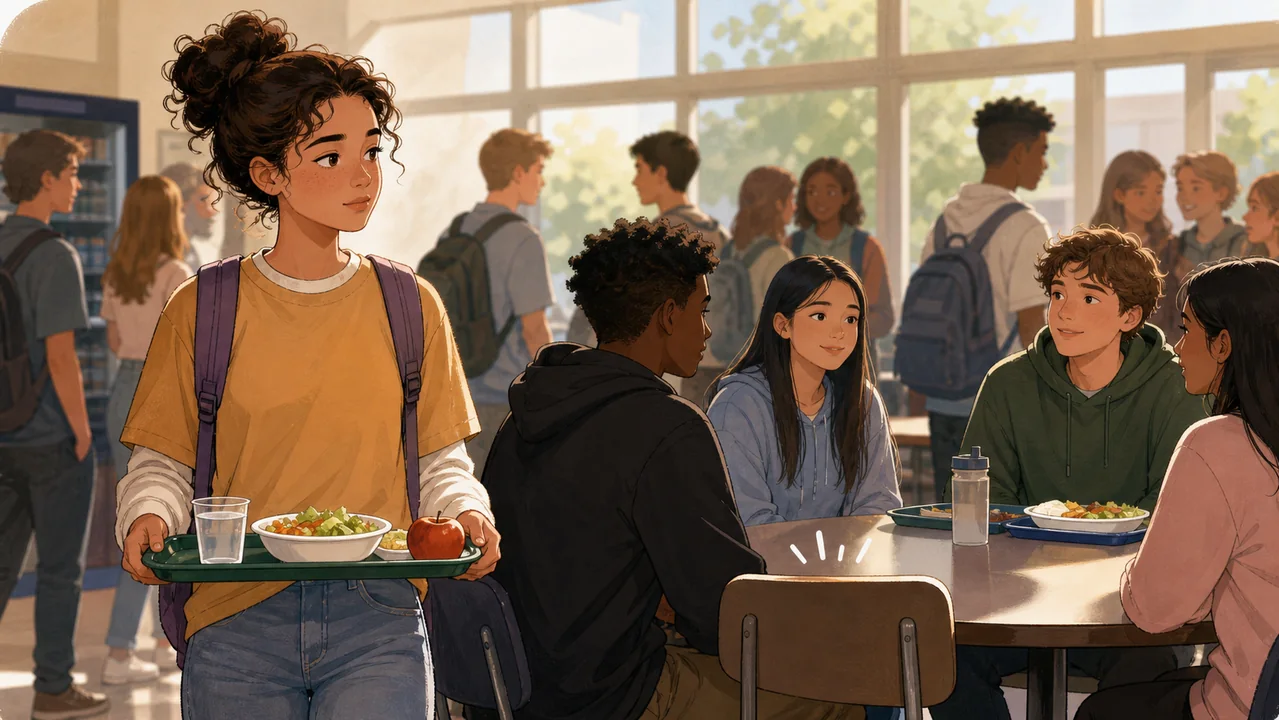
Students learn to break a stressful moment into situation, thought, body signal, feeling, urge, and choice. The goal is to make the moment easier to understand before deciding what to do.
A no at a lunch table is information about that moment, not proof of identity or worth.
Anxiety can point to something that matters, but it should not get to make every decision. Students sort worries into what can be done now, planned for later, brought to a trusted person, or released.
Before orientation, find the room, pack the schedule, and ask one question instead of replaying the whole day.
The point is not fake positivity. Students practice replacing mind-reading, catastrophizing, and all-or-nothing thoughts with balanced thoughts they can actually believe.
"I am bad at math" becomes "This unit was hard, and I can ask for one worked example."
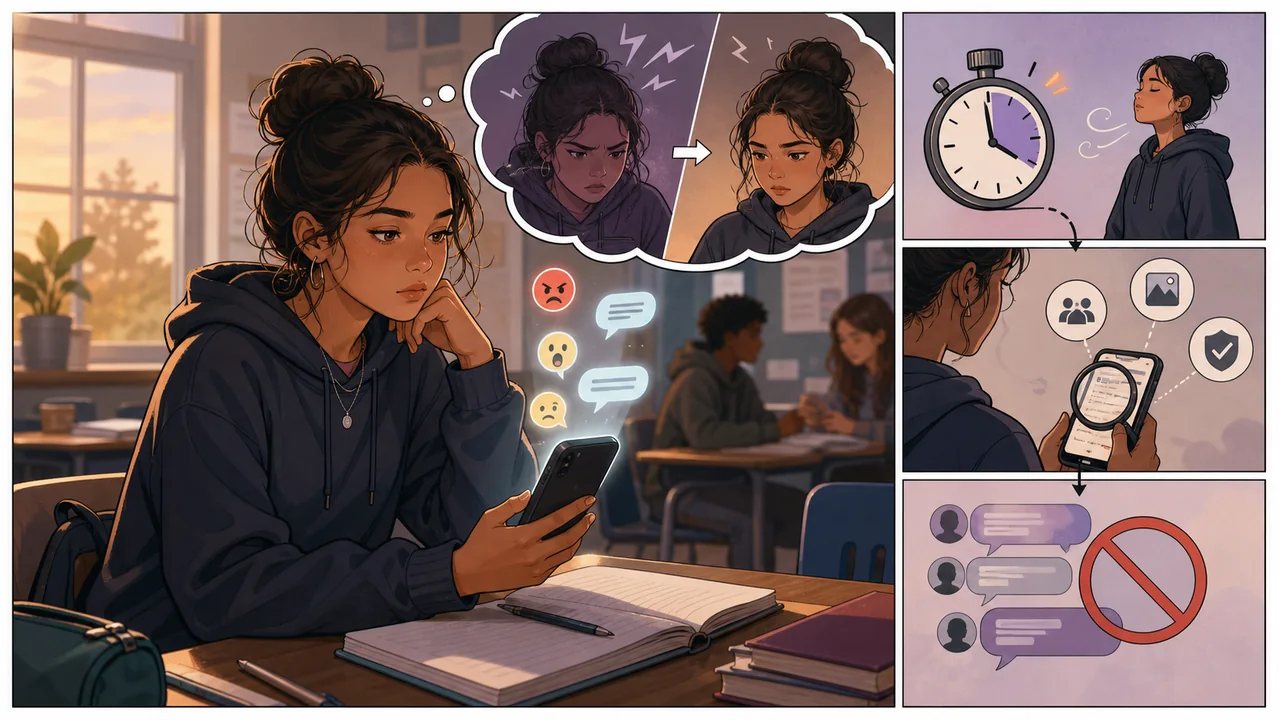
Students learn that emotions rise, peak, and fall. A strong feeling can be real without being the best decision-maker in the room.
In a group chat, wait two minutes before posting the reply that would turn drama into a bigger game.
Distress tolerance means getting through a hard moment without making it worse. The module uses safe reset options and makes clear that health-related strategies need adult and clinical review.
After a humiliating moment, leave the room with permission, get water, breathe, and decide who can help.
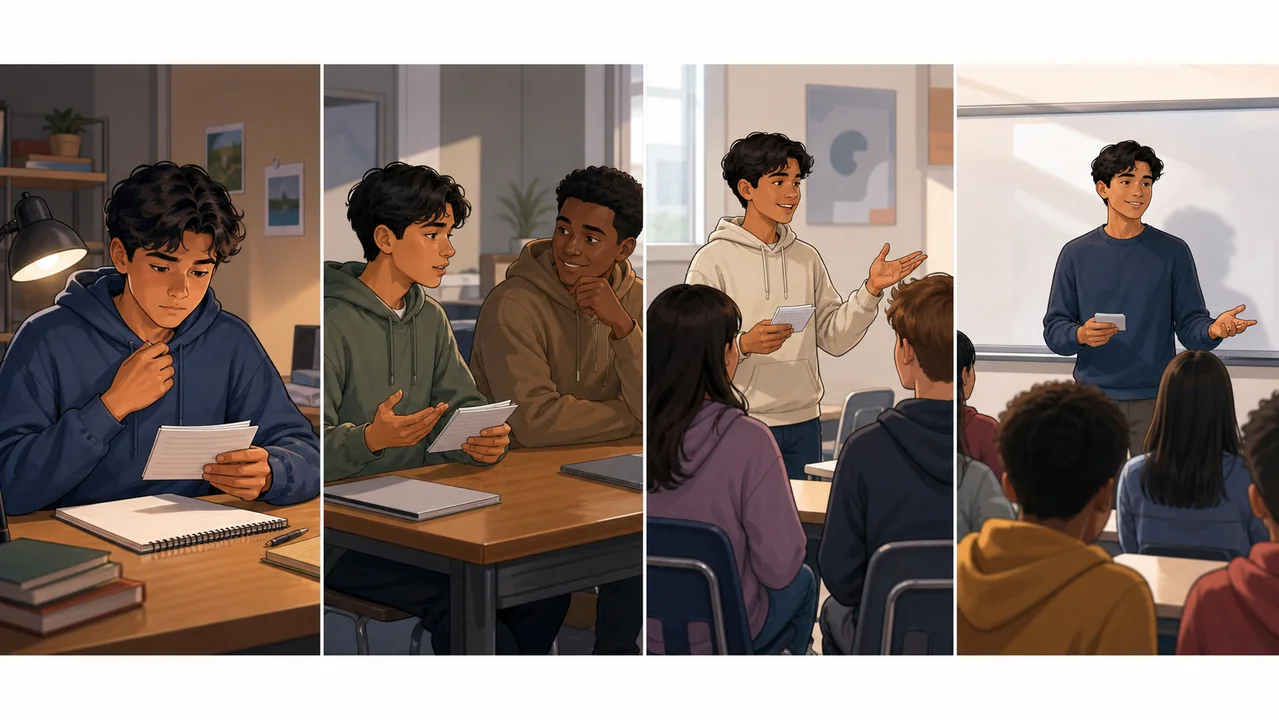
Confidence grows when students take repeated, safe, right-sized actions. This module turns a big fear into a ladder of smaller reps.
Practice one presentation sentence alone, then with one person, then with two classmates.
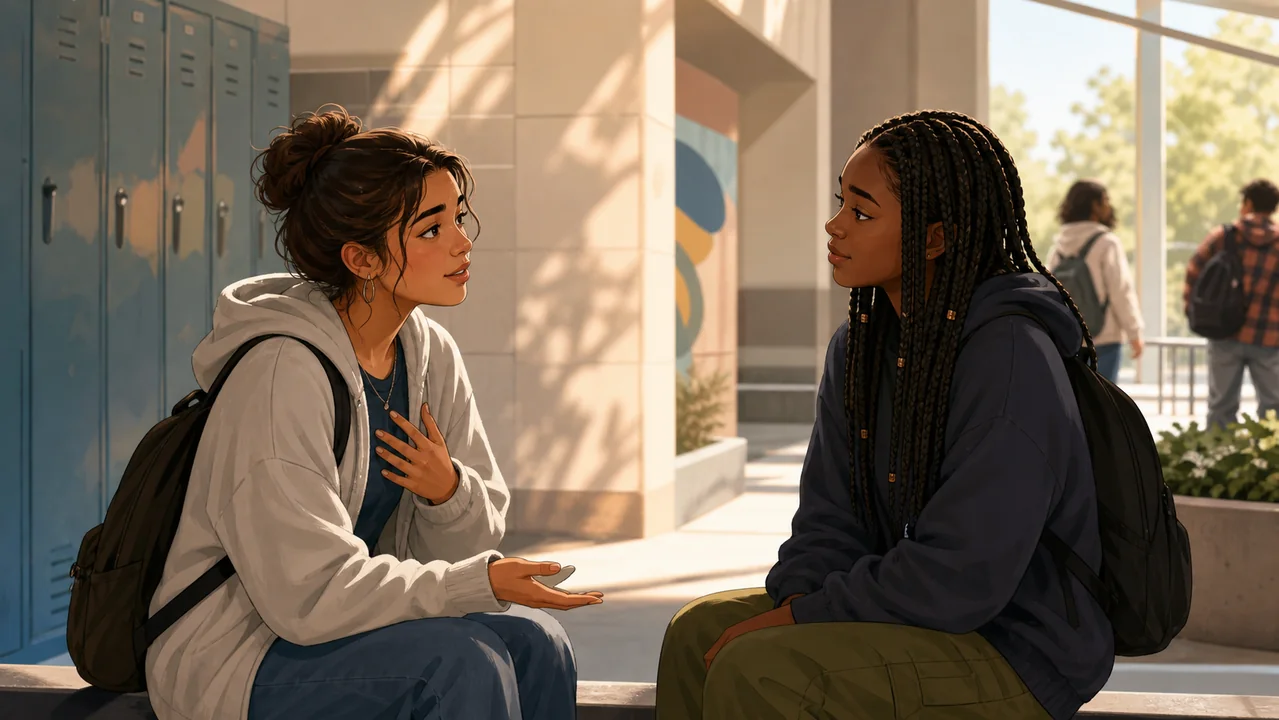
Students practice clear asks, saying no, validating feelings, protecting self-respect, and repairing after conflict. The goal is not to win every interaction. The goal is to keep dignity and clarity.
"I want to sit with you, but I do not want to roast people to stay included."
The last module brings the path together: thoughts, body cues, emotion waves, boundaries, values, and support. Students make a personal support map and a pressure plan.
If "kind" is a value, the next move in drama is to verify, not amplify.
High-school transition highlights
The modules are built around ordinary pressure: new buildings, new peers, higher expectations, changing friend groups, more visible comparison, and more digital noise.
Need: lower social risk. Skill: facts versus guesses, one clear ask, and a backup plan that is not self-punishing.
Need: pause before escalation. Skill: notice the urge, check facts, and avoid reposting harm.
Need: confidence scripts. Skill: "Can you show me the first step? I got lost after the example."
Need: identity protection. Skill: treat one result as information for practice, not a verdict on worth.
Need: brave practice ladder. Skill: practice one sentence alone, then to one person, then in a small group.
Need: grief plus boundaries. Skill: name the loss, avoid revenge posting, and invest in one new repeated activity.
Clinical review before launch
The section is written as mental health literacy and coping-skills education. Before launch, a licensed clinical psychologist should review the student copy, facilitator notes, crisis language, and safety exclusions.
Use "practice skills," "support coping," "build mental health literacy," and "encourage help-seeking." Avoid treatment, prevention, remission, diagnosis, or guaranteed outcomes.
Evidence base to cite
These sources support the educational framing: skills can help students understand thoughts, emotions, coping, relationships, and help-seeking, while clinical care belongs with qualified professionals.